


Since anime and Japanese pop culture have gone mainstream, a lot of Japanese slang has been adopted and reinterpreted by Western audiences. These terms, when adopted by Western Japan fans, often become very disconnected from their common usage in Japanese.
Today I want to explore how a few of these terms actually translate in normal Japanese conversation!
Chuuni 中二病
Chuuni was popularized in the West by the anime Chuunibyou demo Koi ga Shitai. So a lot of Western fans associate it with anime…it isn’t really an anime term, though. The slang predates the show by nearly two decades and has been common in Japanese netizen lingo since then. It literally means “8th grader’s disease.” It’s something of a mix between cringe, sophomoric, and edgelord. I get that Western anime fans will call things “chuuni” now but the way they use it isn’t really aligned with how it’s actually used in Japan.
To give an example of how this is used in Japanese: I have a Japanese friend who is well-educated on philosophy, literature and various spiritual systems. We were speaking (in Japanese) a while back about Hinduism and he remarked that he thought Hindu cosmology was “chuuni” (and that it was cool because of it!).
Japanese literary critic, Boshi Chino, referred to the famous Spanish novel Don Quixote as Chuuni.
I’d argue that people who wear fedoras are chuuni. I was pretty chuuni when I put roots on an ex-boyfriend. Woody Allen and Kendrick Lamar are kinda chuuni. Yukio Mishima and Osamu Dazai are both a lil chuuni. LiveJournal is pretty chuuni, and so are those Substack West Village girl sex newsletters. But I’d even argue that those occasionally veer into menhera territory.
So how shall we translate Chuuni? Sophmoric works in a literal sense. While edgelord feels fitting it also feels a bit too casual…? A Japanese book refers chuuni as having a few types: to who act like delinquents; “subculture”, who go against the mainstream trends; and “evil eye”, who aspire to have special powers….
The context for this is incredibly Japanese as well. Because in America, although we ostracize outliers we have a cultural expectation that people will have some sense of delusions of grandeur. Maybe some words can’t be translated?
Menhera メンヘラ
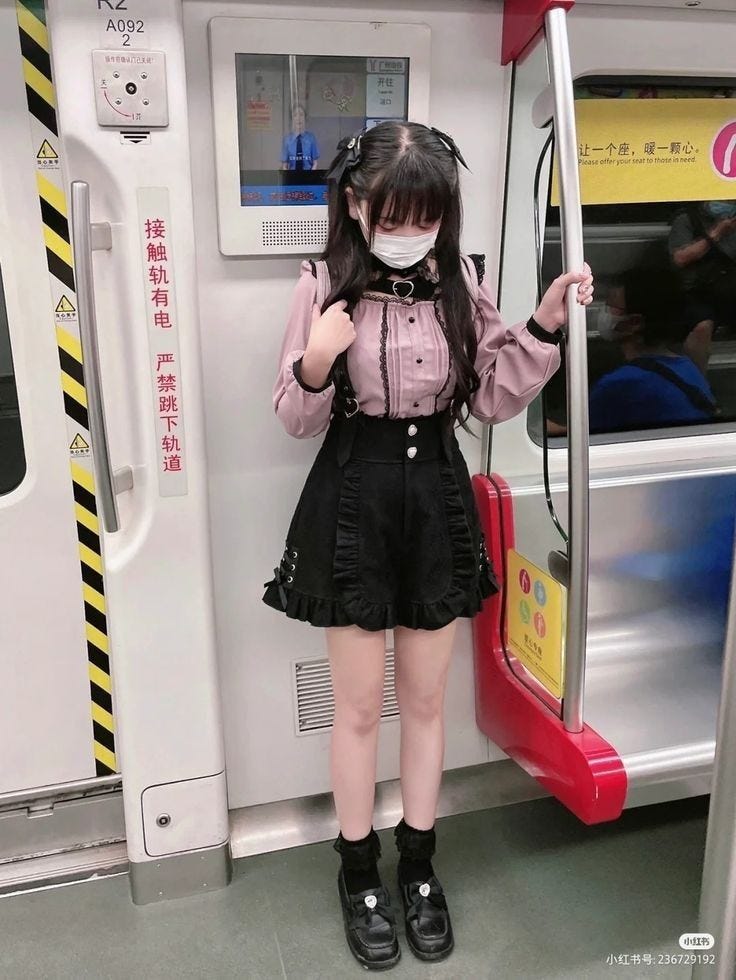
Menhera is a term that has been widely abused by Western fashion fans. It’s literally a portmanteau of “mental health.” I don’t think its adoption constitutes cultural appropriation, since terms naturally gain new meanings when they’re borrowed into new languages. But the most common use of menhera in America is tied to a fashion style that got popular in the mid-2010s, featuring imagery of girls with slit wrists, dyed hair, and needles.
Like Chuuni, this term is used differently in Japan than it is by Western Japan fans.
While that specific fashion aesthetic exists in Japan, menhera is more commonly used as a colloquial term to disparage young women. There’s no single English equivalent, but our casual use of “BPD” gets pretty close.
Things Japanese people often call menhera:
Girls who wear Lolita fashion
Girls who work at maid cafes or concept cafes
Girls who wear Jirai Kei fashion
Girls who go to host clubs
Women with mental health issues that are publicly visible
Possessive or clingy girlfriends
It’s not a specific niche fashion subculture the way it’s been framed in the West. It’s more of a behavioral descriptor that expresses itself through certain aesthetics like Jirai Kei, but the usage is really about the person’s behavior, not the clothes.
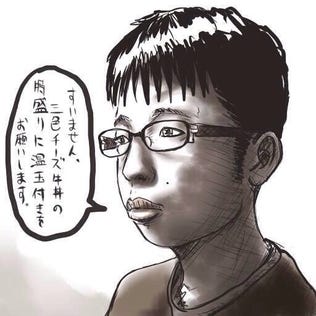
This is probably the hardest to translate and it’s also not widely known to Westerners.
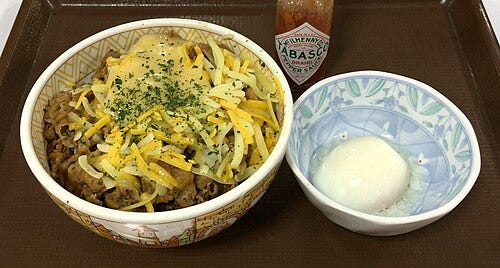
Chigyu, short for Cheese Gyudon (チーズ牛丼), is a pejorative for nerdy dimwitted guys who often order...cheese gyudon. The closest American equivalent is maybe... neckbeard? incel? Chud? Incel and chud imply some political association which this term doesn’t really have. But a neckbeard conjures up the thought of a rotund man in his 40s. Whereas a chigyu also isn’t that.
It’s making fun of someone’s intelligence, social grace(or lack thereof), appearance, hobbies and fast food preferences lol.
I hear Japanese people use this more like people would’ve said the term otaku 20 years ago.
Bonus term: Netto Uyoku!
This isn’t a new term, but it refers to Japanese nationalists on the internet. These are the people who spawn in your mentions on X if you’re foolish enough to bring up the atrocities of Nanking. They can also usually be found in the replies of crime reporting, insisting that the criminal must secretly be ethnically Korean. They typically have an image of a cat, a cute girl, or an anime character as their profile photo.
When I heard people talking about “menhera” especially as a style it felt so cringe to me at first, like how can mental illness be a style.
Then I realized it’s the exact same as when we did emo, which comes from the word emotional and was also all about being depressed and cutting (at least for me).
I guess it’s just a young people thing. I might have loved jirai Kei if it had been a thing when I was 13, but now I could never get into it.
I’m so sad it’s the current main youth fashion, because when gyaru was more popular, people were so much more genki and optimistic. It’s so much nicer to base your character around getting wild and being sexy than to base it around sadness.
Ooh, that was very interesting, made me think of several things I encountered. I've encountered "Chuuni" before on 4chan's /a/. But I thought it applies only to the happy-ditzy characteristics like in "Chuunibiyo" anime. It was super interesting to see it being connected to edgelords too. Now I remember that Inio Asano decided to make a manga about a chuuni and it was "A girl on the shore", published around the 2000s-2010s. Asano's character fall into this category a lot, with "being contra mainstream", though he also deconstructs the archetype. I've read all his manga when I was a student and still enjoy them to a degree. ^^ It reminds me of some denpa 90s light novels, like with "Boogiepop" or "The Garden of sinners". Do the Japanese still use "denpa"? Anyway, I thought that chuuni defined as you did sounds super interesting, also being into counter-culture, quite like hikikomoris or the guy who assassinated Shinzo Abe. (^^")
I didn't know that about the fashion use of menhera, I've only encountered the term on 4chan, and then people meant Menhera-chan from the manga - for some time at least, now people don't know her origin and she's just treated as transgender icon. ^^ Anyway, I've encountered some girls on twitter into Japanese fashion who can be described as that (girls with mental health issues and wear Japanese fashion), I thought they are very interesting, also as a sign of a internet (?) subculture (or group) and broader trend. Something that can be seen in "Needy girl overdose" anime, I think.
I only haven't heard about Netto Uyko or Chigyu. It feels like both can often corelate on the Western internet. I haven't encountered Japanese nationalists much, but I've encountered American nationalists a lot. ^^ Interesting how the sociotypes for otaku and neckbeard evolve...
Also what you wrote is so interesting regarding Japanese society and the internet in general, I loved reading about this aspect. :) Will you write more about it? Also, if you have any books on it, I would love to read them. ^_^
(sorry for the long comment, but it was fun, interesting to read and brought some memories ^^)